Founding Daikoku NYC
New York will not let you do it the Yokohama way. A few hundred cars gathering informally is not a scene here, it is an unpermitted event.
- Company
- Daikoku NYC
- Year
- 2022 – Present
- Role
- Founder & Executive Director
- Category
- 0→1 / Nonprofit
Context
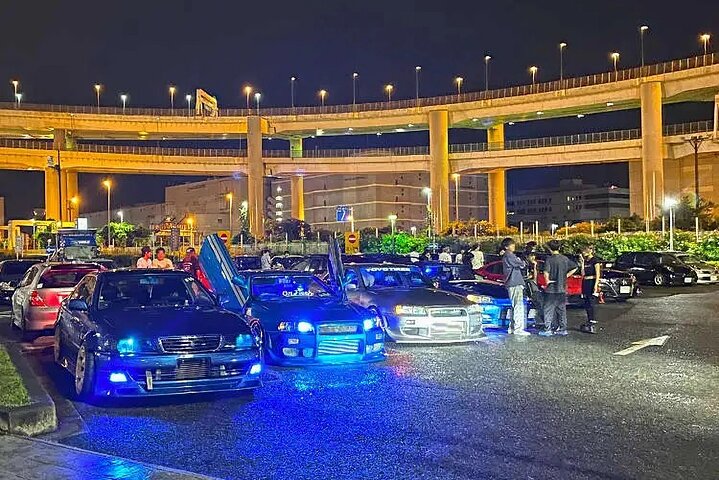
Daikoku Parking Area in Yokohama is a nightly car culture gathering with no organization behind it. Builders, photographers and enthusiasts converge under the expressway lights, and that is the whole structure.
Daikoku NYC was founded in 2022 to bring that energy to New York, not as a replica but as a reinterpretation.
New York will not let you do it the Yokohama way. A few hundred cars gathering informally is not a scene here, it is an unpermitted event, and the city has a specific and unsympathetic response to that.
Problem
Nothing existed to inherit. No organization, no brand, no community, and no standing with anybody who could grant permission for any of it.
The reputation problem came first. Car meets in New York carry an easy association with street takeovers and the kind of footage that makes the local news. An unknown car group approaching the city arrives already sorted into that category. Anything built here had to design against it from the first day, not defend against it later.
Then the practical wall. Running an event on a New York street needs permits, and permits need an applicant the city recognizes: a legal entity, insurance, a named responsible party. A group chat cannot apply for anything.
Solution
Formation. The first decision was to incorporate, and to go all the way to 501(c)(3) rather than stop at an LLC. Slower, more restrictive, and what made everything after it possible.
A nonprofit can hold insurance, apply for permits in its own name, take donations, and partner with a business improvement district. It also forces a governing structure, so the organization runs with a general counsel and a programs director rather than on one person's judgment. The identity was built alongside it, and that is its own case study.
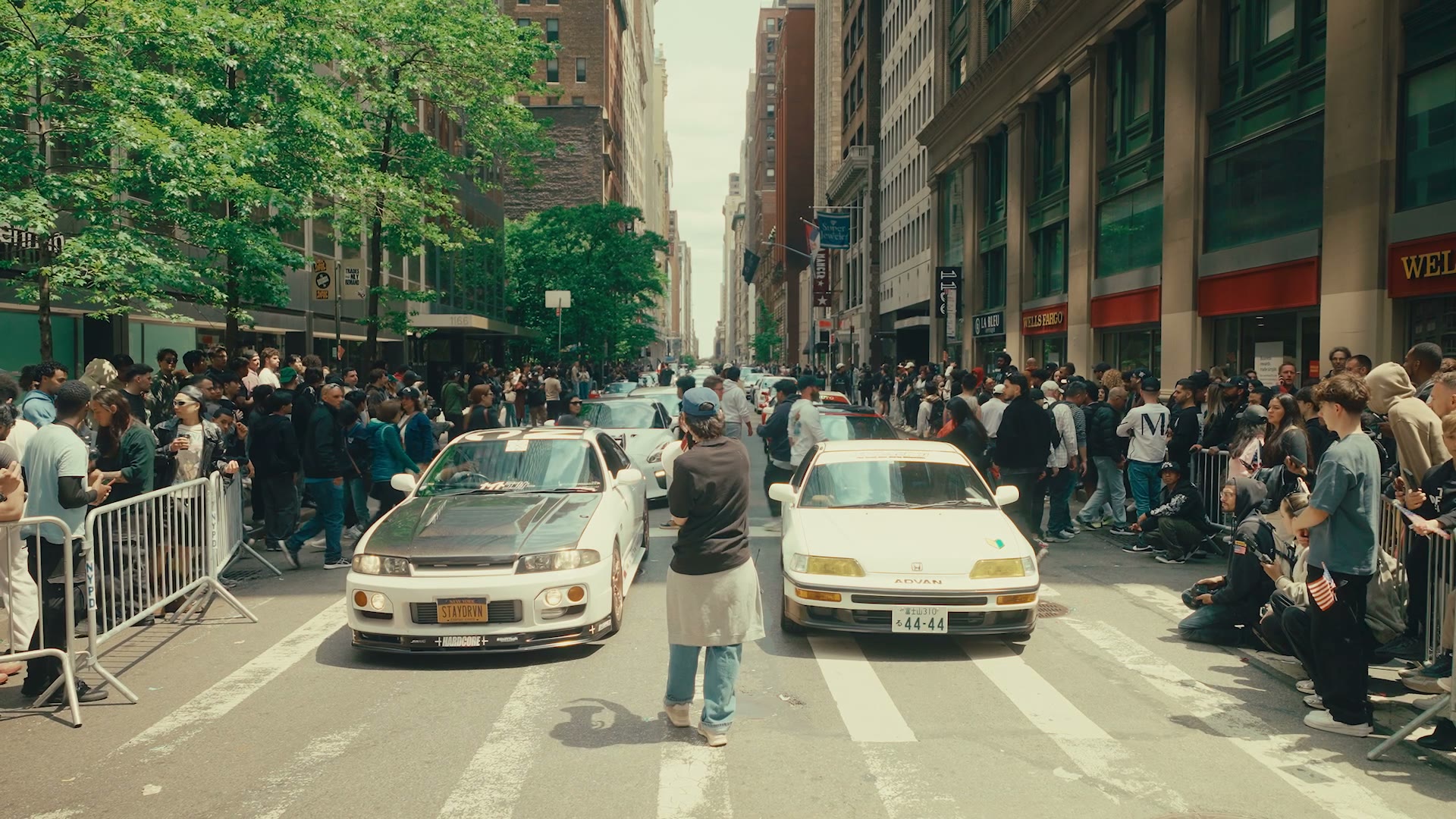
The city. Getting a car event onto a New York street means working the machinery: a street activity permit, sign-off from the community board, coordination with the local precinct, insurance certificates naming the right parties, and a plan for how vehicles enter and leave without turning the block into a spectacle.
Chinatown Night Out runs on Forsyth Street with the Chinatown Partnership. That partnership exists because there was an incorporated organization to partner with.
The police. The most valuable relationship was the least obvious. Rather than treating NYPD as an obstacle to route around, the approach was to be the counterparty they could work with. Turn up early, share the plan, keep to the agreed footprint, take responsibility for what happens inside it.
That paid off in public. When NY1 covered a citywide crackdown on illegal car meetups in April 2026, Daikoku was the organization the press called for the legitimate perspective. Being asked to comment on the crackdown, rather than being cracked down on, is the strategy working in one sentence.
The mission. To foster community, creativity and education through automotive culture, while promoting safety, accessibility and well-being. That sentence is what a community board reads, and it commits the organization in public to five things: preserving JDM culture, building community, mental health, track over street, and money back into local business.
Customer Journey
The path had to run from hearing about it, to showing up, to belonging. Each is a different problem.
Hearing about it is Instagram. Showing up is an event, and events are where the vetting happens. Belonging is the registry, where someone puts their car on the record and becomes part of the organization rather than a visitor to it.
The programming ladders the same way. Community meets and Chinatown Night Out are open doors: no application, turn up. Community activations sit a step in, where the organization shows up as a neighbor on somebody else's block. The Lunar New Year and AAPI Heritage parades are the curated end, and getting picked means something because not everyone is.
Then the driving programming, which makes an argument without delivering a lecture. Track days with instruction and a tech inspection. Drift days, for a discipline most people otherwise teach themselves in an industrial park at two in the morning. Simulator training, for anyone who wants the skill before the car. The position on street racing is written into the values; this is where it gets made.
The last rung is for people who never touch a steering wheel. A photographer and videographer scene grew up around the events, and the organization feeds it with a weekly member-run critique session on Discord.
Behind all of it sits the operating system that runs registration, approvals and communications. That is a separate case study on the product side.
Impact
A registered 501(c)(3), still running, and a fixture in New York car culture rather than a visitor to it.
What changed. New York had enthusiasts and it had meets. What it did not have was an organization that could put those in daylight, with a permit, on a closed street, in partnership with a neighborhood. Tuner culture here used to be something the city responded to. It is now, in this corner, something the city programs with.
Where it circulates. The partnerships are deliberately local: independent shops, wrap and fabrication studios, artists, restaurants, and AAPI, BIPOC and immigrant-owned small businesses. A meet moves money into the block it happens on.
The AAPI thread. Daikoku is named for a place in Yokohama and built in a city with one of the largest Asian American populations in the country. The parades, the Chinatown partnership and the small-business collaborations all make the same argument: JDM culture in New York is an immigrant story, and worth telling as one.
Standing. The press record runs across enthusiast, culture and local news, and the organization holds the standing to keep getting permits. An organization covered only by car media is a car club.
Learning
The formal structure was the creative decision, not the administrative one. Incorporating looked like paperwork, and it was the thing that unlocked permits, partnerships, insurance and a name the city could say yes to. Every cultural thing this organization has done was downstream of a legal filing.
The police relationship was worth more than any campaign. It cost nothing but consistency, and it converted the biggest risk, being categorized with street takeovers, into the opposite.
Legitimacy is what buys cultural license. Being permitted is what lets the organization close a street in Chinatown and roll in a city parade. The paperwork is not the opposite of the culture, it is what protects it.
This is the one project in the portfolio where none of the structure existed beforehand. Every AT&T problem I work on happens inside a system that was already there.